A Complete Guide to Vacant Property Security: Insurance and Risk Management

Ross Chojnowski

Digital Marketing Executive

The Safer summary

An estimated 165,000 commercial and business vacant properties exist across the UK. Security for these premises is essential due to heightened risk of squatting, trespass, organised crime, cable theft, fire, and flood.

These risks can cause financial loss, project delays, and insurance issues. Our vacant property security is multi-layered and relies on perimeter protection, physical defence, detection technology and 24/7 monitoring to deliver full risk mitigation and guarantee insurer confidence.

An emerging issue

Vacant property is booming in the UK. Our town centres and cities are full of empty commercial buildings due to the pressures of the economy, changes to working culture and patterns in the wake of COVID-19, development delays, and ongoing regeneration.

Statistics gathered in 2023 suggest an estimated 165,000 privately owned commercial and business premises lie empty.

With the number of sites increasing annually, understanding the risk factors that affect the security of vacant property becomes vital, while identifying the steps property owners can take to ensure sites remain secure and compliant with insurance requirements is integral.

What is vacant or ‘void’ property?

Vacant or void property is a term used to describe any building, residential or commercial, that is empty or unoccupied. For a property to be considered vacant, it must not have a legitimate tenant in residence.  

Examples of notable void properties include long-term historic or heritage properties, which are often vacant due to complex requirements. Lapsed commercial premises, with land that may hold high value, are also at risk.

Vacant properties hold high developmental potential but often remain void due to the lengthy process and delays involved in getting projects off the ground, such as obtaining planning permission.   

Why do vacant properties present a higher security risk?

Vacant property carries a high security risk due to a lack of day-to-day oversight with reduced to no staff on premises, issues such as intrusion, theft, or damage caused by fire and flood can go unnoticed for some time.

This increases the risk of escalation and can result in significant financial loss, project delays, or voided insurance policies.

Regardless of the value of your vacant property, a security system that offers full risk mitigation is necessary.

Risk to these properties is driven by absence and prolonged exposure, which increases vulnerability.

If the site were subject to round-the-clock security, these risks could be controlled.

Need Site Protection?

Let's secure what matters most.

What are the biggest security threats to void properties?

Vacant or void properties face a variety of alarming threats.

The most common risks are squatting or illegal occupation, and travellers breaking into or taking refuge in your premises.

Following an intrusion, property owners may be liable to pay for expensive evictions, complex legal challenges, and damages.

Children and young people, who are naturally curious, carry a greater risk of trespass on vacant property. This is heightened by social media trends like urban exploration, which has seen a great deal of attention in recent years. 

As the property owner, you have a duty of care to secure your property and protect trespassers under the Occupier’s Liability Act 1984.

Injury suffered on site is your responsibility, with financial loss and significant reputational damage being potential outcomes of any major incident.

What is "Urbex"?

Urban exploration, also known as ‘urbex’, is a growing trend in the UK. Fuelled by social media, urbex encourages individuals to enter abandoned or restricted structures to capture footage. Forcing entry or causing damage and committing theft on vacant property is a crime.

Trespass can also result in civil court action, unless entering sites like power plants, railways, telecommunications premises or government buildings which all fall under criminal trespass law.

Health is at risk too, with exposure to harmful materials like asbestos. Structural weaknesses found within abandoned or vacant properties can pose serious harm to life.

What's the risk?

Organised crime presents further risk to vacant property. With the value of copper at an all-time high, scrap value incentivises cable theft from sites that are not monitored.

Office buildings, factories, retail spaces or electrical and telecommunications infrastructure are all vulnerable to criminals due to their copper-laden nature.

Theft results in financial loss, insurer scrutiny, and project delays.

Vacant properties carry a significant fire and flood risk, often linked to theft and intrusion.

Home Office estimates suggest that up to 60 fires occur in or next to an empty property in the UK daily.

As nobody is on site to spot the warning signs, hazards can go unnoticed and escalate into major catastrophes.

Seasonal factors can contribute to this, with excessive summer heat perpetuating fire on sites through combustible waste, while freezing winter conditions can cause flooding through burst pipes and undetected damage.

Due to visible neglect, void properties can quickly attract members of the public intent on causing harm.

Anti-social behaviour can thrive in these buildings.

Shelter, perceived privacy, and concealment make vacant property attractive to those wishing to engage in illegal practices like drug use, vandalism, or fly-tipping; there is a perception that there is little oversight or monitoring of the premises.

Visual deterioration can further lead to community resentment. Social media has created a culture of shaming property owners or companies who neglect derelict sites for prolonged periods.

All of this can cause reputational damage and bad press which may have lasting consequences.

What should the security approach be?

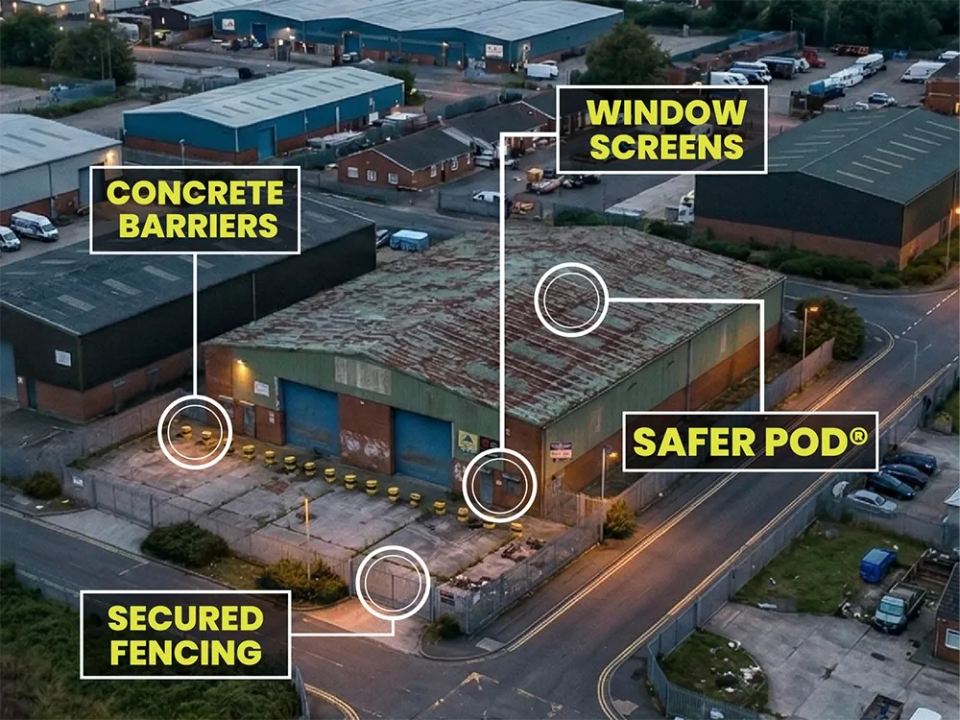
The best vacant property security approach works from the outside in. Visible deterrence comes first, then layered detection technologies are introduced, before inner property reinforcement is prioritised.

A multi-layered approach is effective as it creates reinforcement at each depth of the unoccupied site.

The most efficient strategy addresses the needs of the external environment before the building itself.  

Starting with the perimeter, the erection of a secure fence line is a visible, physical deterrent to create a barrier preventing unauthorised access.

This allows for the control of all access points through reinforced, secure doors.

In larger projects, concrete barrier blocks are used to prevent vehicle access to the compound. These can weigh as much as 4-6 tonnes.  

Moving to the inner layer, detection becomes paramount.

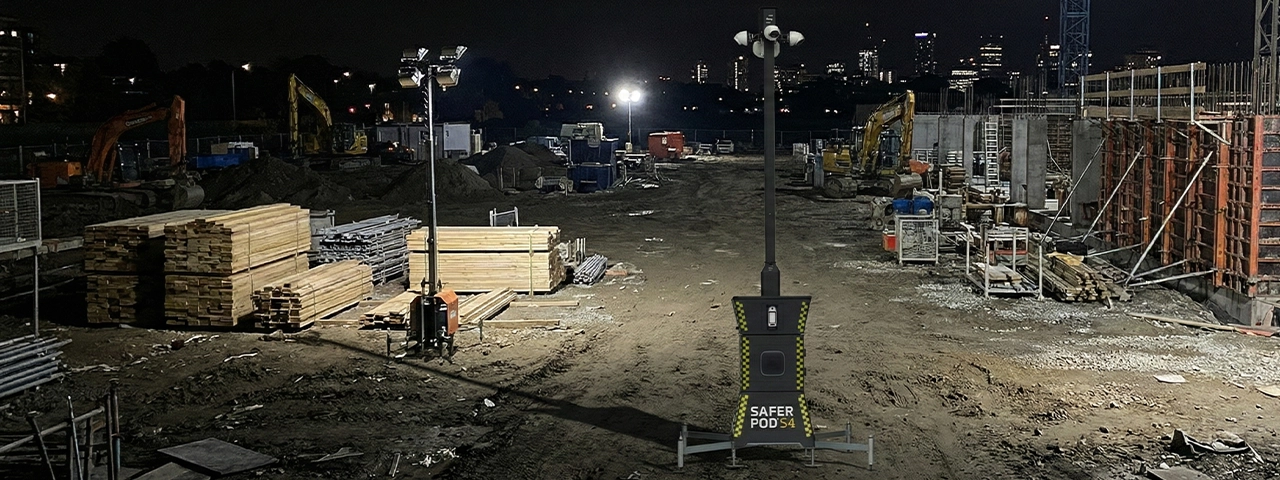
The installation of fixed CCTV or a perimeter intrusion detection system, such as our Safer POD® S1 or Safer POD® S4 devices, will first act as a visual deterrent to deter intrusion by making potential criminals aware that they are being watched. 

Safer POD S4/X4

Award winning perimeter protection with active thermal detection, ideal for medium to large projects.

  • Bi-spectrum active thermal detection up to 100m
  • 50m infra-red night vision
  • Methanol fuel for zero emissions aside from heat and water
  • Pulsing illumination signalling active watch and alerts (X4 only)
Safer POD® S4/X4

Capturing intruders in real time can also ensure legal and insurer compliance is met while the immediate mobile response ensures trespassers can be removed rapidly from the project, reducing the risk of squatting or anti-social behaviour.

The building itself will then become the priority.

Securing all doors with heavy-duty locks is a must, while particular attention should be paid to areas like fire exits or basement access points which are easily accessible but often forgotten.

Higher risk scenarios can require the addition of a manned guard, with dog handlers deployed to add a greater level of security.

It is important for the inner layer of any vacant building to be subject to a sweep to remove any combustibles that carry an arson or fire risk.

Window screens, made of materials like perforated steel (unless grade I listed) are essential for long-term vacant properties.

Steel security screens for windows can delay forced entry, while any potential assets or valuables within the property are also hidden from view.

Layered detection creates an early warning system for environmental hazards.

Fire detection sensors, and escape of water monitoring to prevent flooding are all advisable measures in a strategy which aims to provide full risk mitigation.

Related

Insurer requirements and expectations

Vacant properties face stricter insurance conditions - this is due to the risk-laden nature of such properties. Commercial building insurance policies typically offer basic cover for up to 30 unoccupied days on average.

Beyond this, tougher conditions are introduced. If not followed, insurers may not pay out in the event of a claim.

To comply from day one, property owners are required to implement a full risk mitigation strategy.

Aside from the obvious like changing locks and securing access points, it is expected that power to the site is isolated or removed, while water is drained from systems.

Waste, both internal and external, must be removed in accordance with environmental regulations to prevent fire risks and make the site less attractive to criminals.

Physical security measures, like British Standard-compliant steel security screens and advanced detection systems are considered integral.

Regular inspections of the site are expected to be carried out from day one.

It is in the best interest of site owners to protect their property and preserve the value of their assets.

In time, a strong risk mitigation strategy will maintain a site’s insurability while strengthening the validity of a claim if an incident does occur.

In some cases, insurers may even cover the security costs required to protect a property as claims affecting larger projects can run into the millions.

Multiple solutions, one provider

Safer Group offers a bespoke, full risk mitigation package for vacant property.

Our team assess the full range of risks on your project, including intrusion, fire, and flood.

With full risk mitigation, we provide a single point of accountability which reduces gaps, increases insurer trust, and provides efficient protection.

Following industry best practice and allowing you to choose the cover you desire, we offer all physical security solutions necessary for your vacant property.

From British Standard-compliant steel screens to fencing, boulder blocks, or on-site dog handlers, we can source these for you.

We are detection specialists, with fixed CCTV or our perimeter intrusion detection systems including the award-winning Safer POD® S4 available.

All detection systems are monitored in-house, 24/7, by an accredited monitoring team.

As well as an initial risk assessment of the property, weekly inspections are included in our service.

We review all physical security to ensure it is intact and perform tests to confirm that alarms are operational.

This strengthens insurer confidence by placing the accountability on us. By taking on the ownership of security decisions, we manage the risk and ensure peace of mind.

As security specialists, our recognition at the Security & Fire Awards for Excellence for managing security at Tata Steel’s high-risk Port Talbot steelworks site demonstrates the effectiveness of our vacant property protection at an unprecedented scale.

The project demonstrated how autonomous, layered security can operate reliably in what is one of the most complex vacant environments within the UK.

Vacant property does not have to be vulnerable. With every type of vacant property, whether it be a commercial office, industrial warehouse, or lapsed construction site, unique risks will manifest.

Securing your project against these is essential.

With the right multi-layered strategy in place, risk can be managed.

With risk controlled, the long-term value of your vacant project is preserved, and insurer compliance can be maintained.